03.12.2014
Ljubljana, Slovenia and Trieste, Italy trip for delegates from government, business and academia in Albania and Kosovo to learn about the institutions and financing tools that support innovation in Slovenia and Italy
The OECD Investment Compact (IC) organised a study trip to Ljubljana and Trieste from 24-27 November 2014 within the context of the Triple Helix Projects in Albania and Kosovo, which are implemented under the Technical Assistance Pillar of the Western Balkan Enterprise Development and Investment Framework (EDIF) and is supported by the European Commission (EC).
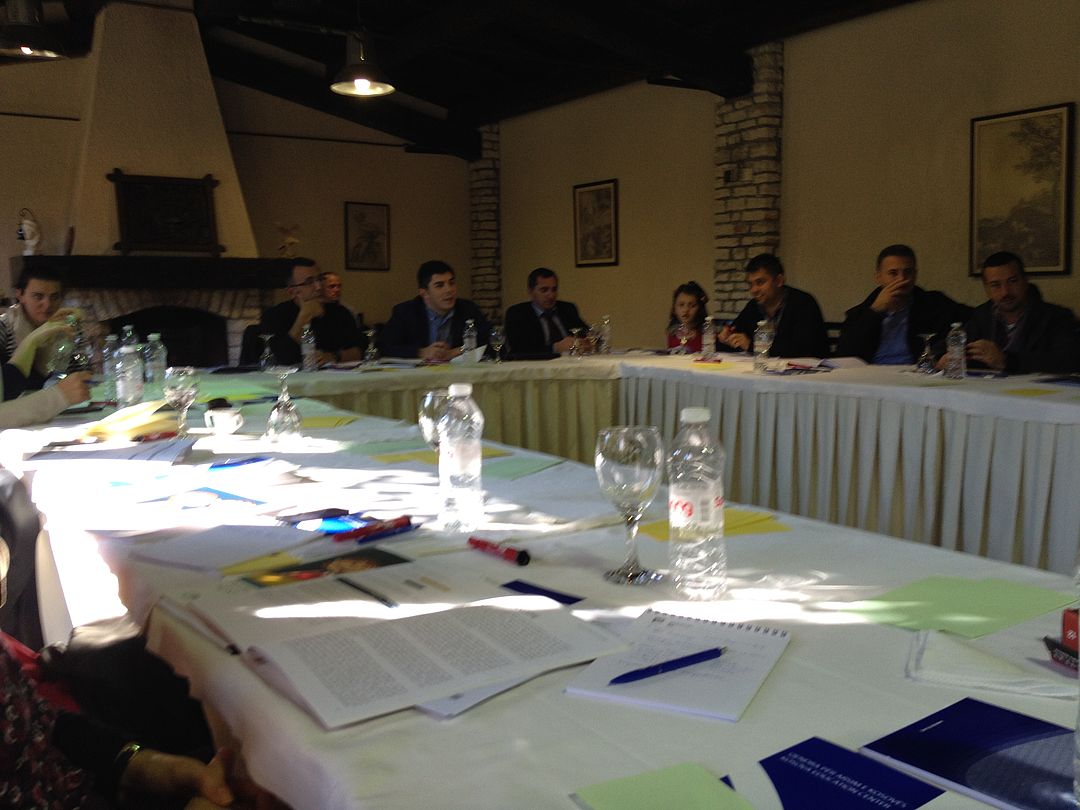
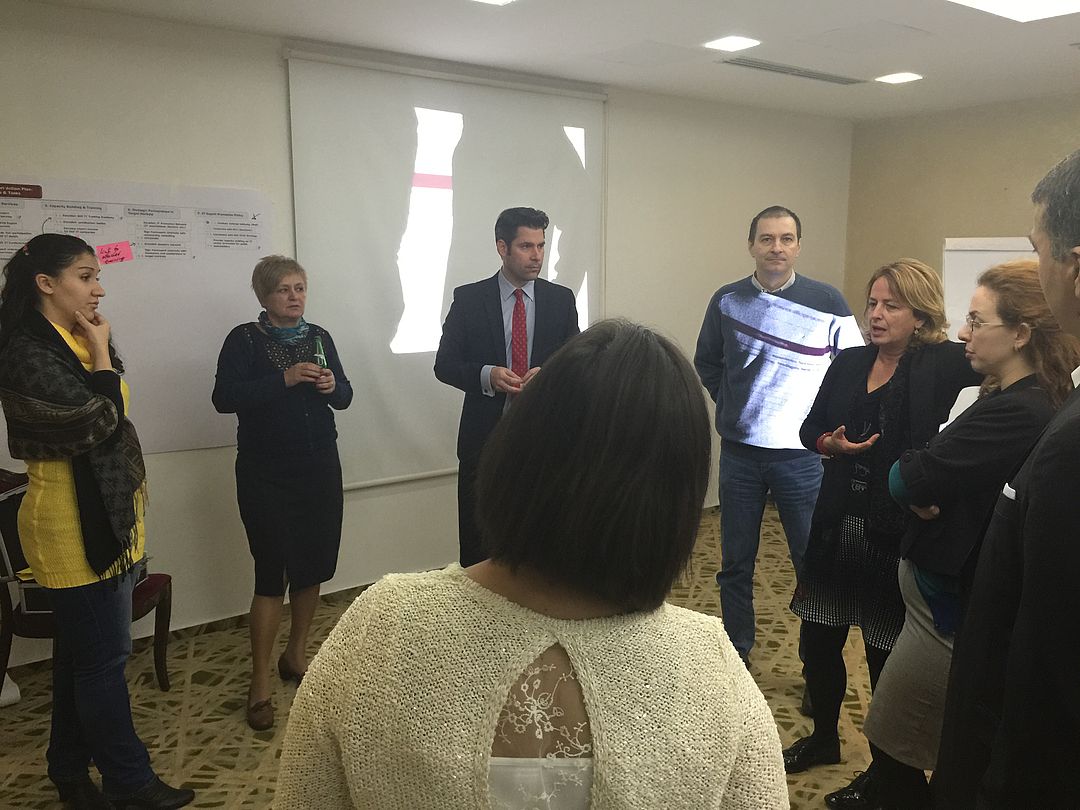
The purpose of the study trip was for delegates from government, business and academy in Albania and Kosovo to better understand the institutions that support innovation in Slovenia and Italy. The delegates from Albania included Daniel Guce of AIDA, Genti Guxho of Polytechnic University of Tirana, Bledar Meniku of Ministry of Innovation, Dritan Mezini of AITA, Elsona Papadhima of the Ministry of Education and Sports, and Bashkim Sykja of the Ministry of Economic Development. The delegates from Kosovo included Nol Buzhala of KIESA, Valdrin Lluka of KIESA, Lorik Mullaademi of STIKK, Eljana Naka of the Ministry of Trade and Industry, Murteza Ostaudaj of Ministry of Education and Science, Kushtrim Podrimqaku of University of Prishtina, and Xhemajl Syla of KIESA. The delegates arrived in the afternoon of Monday, November 24th and a group dinner was organised at Sokol restaurant that evening.
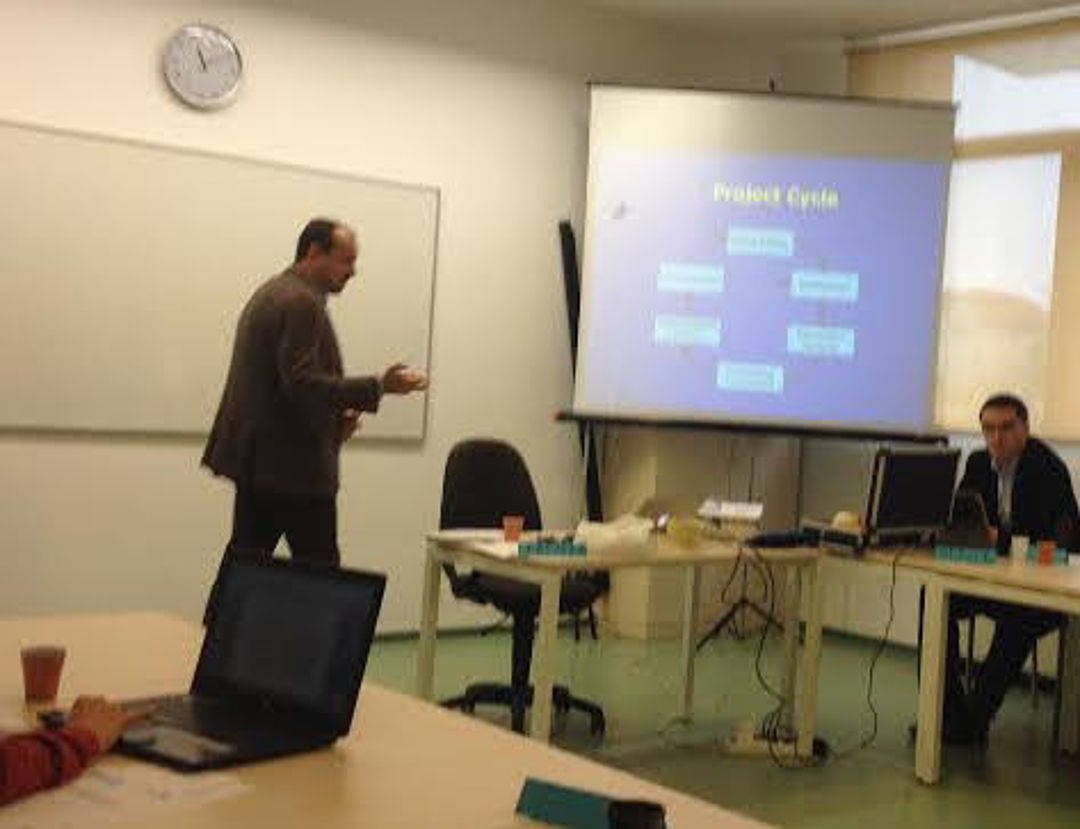
The study trip began on Tuesday, November 25th with a meeting at the Jozef Stefan Institute (JSI) with Ms. Marjeta Trobec and Mr. Luka Virag. Ms. Trobec, Industry Liaison Manager, gave an overview of the history of the Jozef Stefan Institute, the leading scientific research institute in Slovenia.
With 930 staff, the Institute has annual revenue of EUR 46 million (EUR 32 million from government funds and the remaining from private Slovenian companies and EU projects). Mr. Virag, Legal Counsel, described how the Institute’s Centre for Technology Transfer and Innovation provides support to researchers in their efforts to commercialise inventions. In 2013-2014, the TTC helped researchers file 31 patents, obtain 8 licensing agreements, and create 4 spin-out companies.
Next, Ms. Lea Kane, Communications Manager at JSI, presented the EU projects with which the Institute is implicated (e.g. Euronet, FireMed and Euraxess) and the networking events that help young researchers become involved at JSI. After the coffee break, Mr. Levin Pal, Technology Manager, described the activities of the Consortium for Technology Transfer, which brings together a number of TTCs in Slovenia and supports researchers in their patent applications. CTT does the following activities to ensure that research meets market: 1. Acquisition of idea, 2. Preparation of docs, 3. Market research, 4. IP protection, 5. Market commercialization (publication on EU database, domestic and international market research, web/fairs/publications), 6. Prepare contracts.
Finally, Mr. Zoran Mrinsek, Head of the Competence Centre for Advanced Control Technologies, described the role of competence centres in supporting specific sectors. The support comes in the form of networking, strategic planning, and policy influencing. He recounted his experience leading INEA, the Josef Stefan Institute’s first spin-out company, in 1984.
The delegation then visited the research labs of JSI’s Department of Thin Films and Surfaces. One of the researchers showed the delegation some metallic tools that had been developed that were effective in resisting corrosion during the manufacturing process. He explained that funding for his projects comes from national government (45%), private companies (40%) and EU funds (15%). The group then visited the Department of Automation, Biocybernetics and Robotics, where three researchers demonstrated a number of robots that they had developed to mimic the movements of humans in conducting tasks such as skiing or walking around a hospital. They stressed that one of the greatest challenges researchers face is that governments too commonly allocate funding to labs that publish the most rather than to those that engage in projects with the most innovative potential.
After lunch, the trip continued with a visit to the Slovenian Research Agency (SRA) to meet with Mr. Janez Slak, Mr. Marko Perdih, Mr. Simon Ošo and Ms. Dubravka Krneta. Mr. Slak, Deputy Director, began by providing an overview of the innovation system of Slovenia and compared Slovenia’s performance with other European countries. He explained that the agency’s budget is approximately EUR 140 million and that, as SRA primarily funds basic research, 50% goes to universities, 47% to research institutes and 3% to the private sector. He explained the constitution of the governing board, which includes one representative from the private sector (chamber of commerce). He explained that the average size of a project is approximately EUR 100 000 over 3 years and that 40% of funding recipients are young researchers who have received their PhD within the past 10 years. This research agency is supported by the government funds and is part of the Ministry of Education, University and Research. They support the Triple Helix collaboration.
The delegation then visited the ICT Technology Network Institute to meet with Mr. Stanko Salamon (previously worked in Kosovo). Mr. Salamon explained that the ICT Technology Network, established in 2003, is a Triple Helix cluster that brings together 46 members from the private sector and research and works closely with SPIRIT, the Slovenian public agency for the promotion of entrepreneurship, innovation, development, investment and tourism. ICT TN is more horizontally focused than most clusters, which explains the use of the term ‘technology network’ rather than ‘cluster’ in the name. It obtains 15% of its EUR 400 000 budget from membership fees, 60-75% from the EU (cash flow killers) and 10-25% from private sources. ICT TN helps its members apply for European projects and has enabled EUR 100 million of project funds for its members since 2003. This ICT cluster organization is concentrated in promoting ICT companies collaboration with other companies in order to penetrate international market (package offers). Moreover, they have are of competence related not only to technologies but also to non-tech improvement such as marketing, business development, IPR etc. A key feature for the cluster is that it is aiming at exporting to non-EU markets as Mr. Salamon explained that aiming at EU markets is kind of like having incest because you are selling to your own economy. Thus, they are concentrated in exporting to India as they deem it as an untapped market with a lot of potential for exporting. Mr. Salamon expressed his interest in collaborating in the near future with the members of the delegation from incubators, namely Mr. Dritan Mezini of AITA and Mr. Lorik Mullaademi of STIKK.
On Wednesday, November 26th the delegation travelled to Trieste to visit the AREA Science Park and meet with Ms. Laura Ramacci and Mr. Alessandro Deltreppo of the Marketing and European Projects Unit. Ms. Ramacci gave an overview of the park, which includes 3 campuses, 94 research centres and high-tech companies, 2 500 employees and EUR 190 million in revenue (evenly sourced from tenant fees, the Italian government, and joint projects). Mr. Deltreppo presented the technology transfer office and innovation network, which helps companies identify market applicability and file patents.
Next, Ms. Marija Hariwa Kozlik presented the Innovation Factory, which is AREA’s ‘first mile’ incubator and has facilitated the creation of 11 start-ups. She explained that the incubator has received EUR 2.5 million from the Italian government for a 3-year period, but aims to be self-sustainable. Then, Mr. Martino Jerian, CEO of Amped Software explained how the Innovation Factory helped him develop his business plan and file a patent for his business idea. His start-up, which now employees 5 people, improves the quality of blurry photos, particularly for forensic and law enforcement purposes. He explained how the Innovation Factory took a 25% stake in his company at inception and exited 3 years later, thus ensuring alignment of interests.
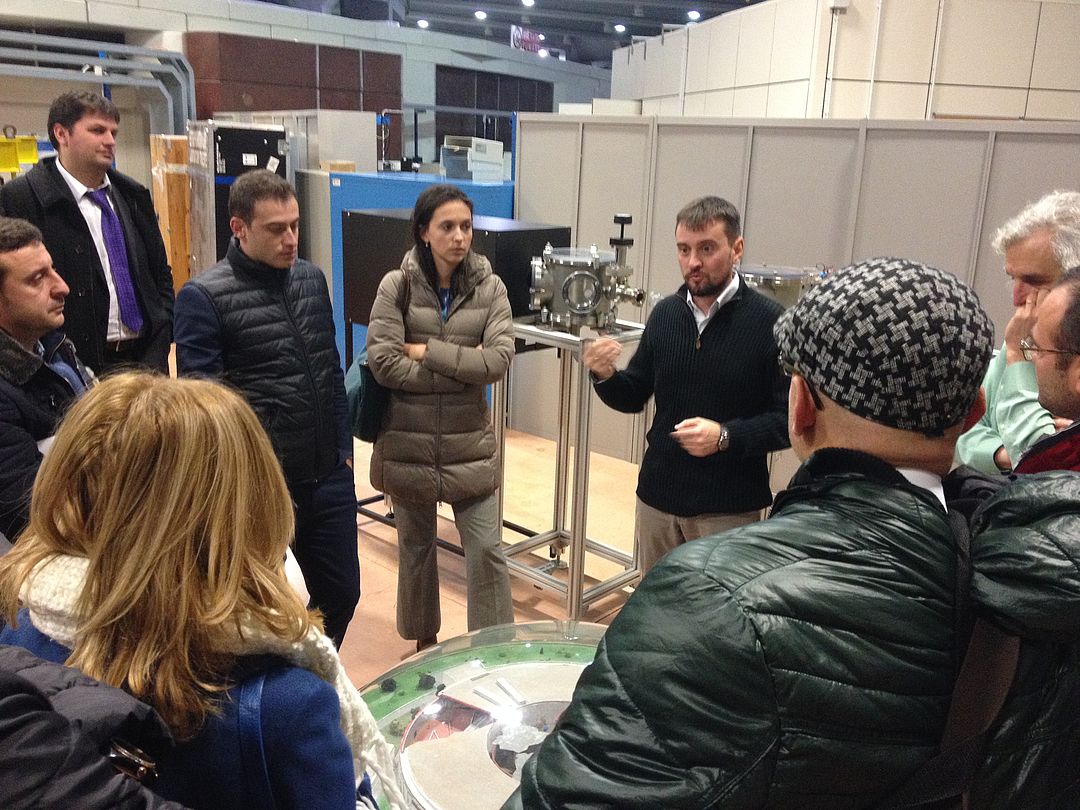
After lunch, the delegation visited AREA’s Basovizza Campus to meet with Mr. Mauro Zambelli, General Coordinator of the Elettra Sincrotrone, a cyclic electron accelerator. Mr. Zambelli outlined the business model of Elettra Sincrotrone Trieste, a private company with 400 employees that sells services to customers in industries such as electronics, pharmaceuticals and petro-chemicals to study objects in detail with high-intensity light. Though Elettra charges its private customers for this service, this revenue accounts only for a small percentage of its budget and the remainder is covered by the Italian government (the company allows academic researchers to use the service free of charge). Mr. Zambelli presented a number of examples of how companies can use the service, such as to analyse the value of a mobile phone battery without taking it apart or to study the structure of a dry adhesive naturally found on frogs’ legs. After the presentation, Mr. Zambelli showed the delegation around the Sincrotrone facility.
On Thursday, November 27th, the delegation met with Mr. Istak Lesnak and Ms. Marjana Majeric at Technology Park Ljubljana. Mr. Lesnak, General Manager, gave an overview of the hi-tech infrastructure and services/mentorship that the park provides its 280 member companies. He noted the importance of having a high-quality university in Ljubljana, which develops skills and ideas that feed into the technology park. Ms. Majeric, Deputy General Manager, provided an overview of the success factors of the park and explained in detail the support that the park provided to the setup of a similar park in Montenegro. Ms. Majeric has shown an increased interest in supporting the movement of Kosovo for establishing a tech-park (STIKK’s initiative), where she is willing to further discuss and mentor the Ministry of Trade and Industry, respectively its representative Ms. Eljana Naka, in helping the ICT association in establishing the tech-park.
Finally, Mr. Matej Rus of Start-up Slovenia presented the Slovene Enterprise Fund, which was set-up to improve access to finance for Slovenian firms through guarantee schemes and equity financing. A number of delegates asked about complementarity with the Western Balkans Enterprise Development and Innovation Facility (EDIF). Mr. Peter Ribaric, Managing Director of Silicon Gardens, presented his micro fund, which provides seed capital (between EUR 20 000 and EUR 40 000) to Slovenian entrepreneurs and usually takes an equity stake of approximately 10-25%. Mr. Rok Loncaric, Director of the start-up Stran Plus, explained his company’s business model, which produces portable cooling/heating systems that reduce electricity operating costs for hotels and office buildings. He recounted how Technology Park Ljubljana supported him to develop his business.