STIKK, KIMERK and NQA join forces to strengthen the quality of professional training in ICT and Renewable Energy.
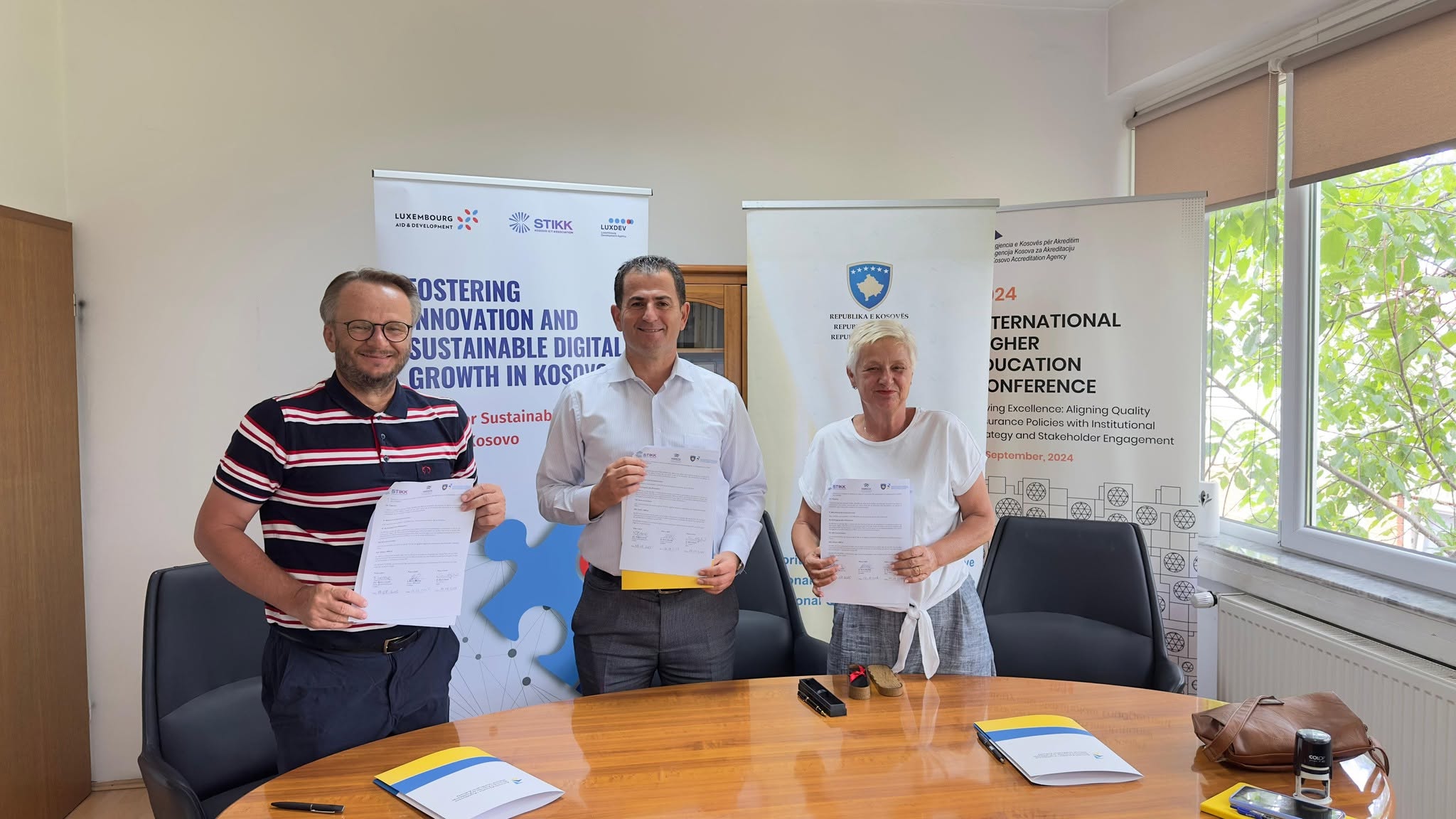
Prishtina, 17.07.2025 — The Kosovo Association of Information and Communication Technology (STIKK), the Metal Industry and Renewable Energy Cluster of Kosovo (KIMERK) and the National Qualifications Authority (NQA) have signed a Memorandum of Understanding to support private training providers in the fields of ICT and Renewable Energy.
This cooperation aims to create a clearer, more structured and easier-to-navigate pathway for the validation and accreditation of training programmes. Through this partnership, the parties will work together to guide private training providers towards the required standards, ensuring that their programmes are of high quality, relevant to labour-market needs and lead to formally recognised certificates.
For STIKK, this agreement represents an important step in strengthening the quality of professional training in the ICT sector. In a market where the demand for new skills continues to grow, it is essential that training programmes are aligned with the real needs of industry and provide clear value for both individuals and employers.
At the same time, the involvement of KIMERK extends this cooperation to the field of Renewable Energy, a sector with strong development potential and a growing need for professionals trained according to clear standards. NQA, as the institution responsible for qualifications in Kosovo, will play a key role in guiding the process in line with institutional requirements for validation, accreditation and formal recognition.
The common goal of this Memorandum is to provide private training providers with greater clarity on the steps they need to follow, the documentation they need to prepare and the standards they need to meet. This is expected to contribute to raising the quality of training programmes and strengthening trust between training providers, institutions and the labour market.
This cooperation is also an investment in the credibility and value of acquired skills. When training programmes are accredited and certificates are formally recognised, the benefit is twofold: individuals gain qualifications that are more valuable for their careers, while employers have greater confidence in the competencies of the workforce.
Through this Memorandum, STIKK, KIMERK and NQA reaffirm their commitment to supporting the development of a professional ecosystem based on quality, standards and institutional cooperation.
This initiative was carried out with the support of the “Skills for Sustainable Employment in Kosovo” project, financed by the Grand Duchy of Luxembourg and implemented by LuxDev, the Luxembourg Development Cooperation Agency.